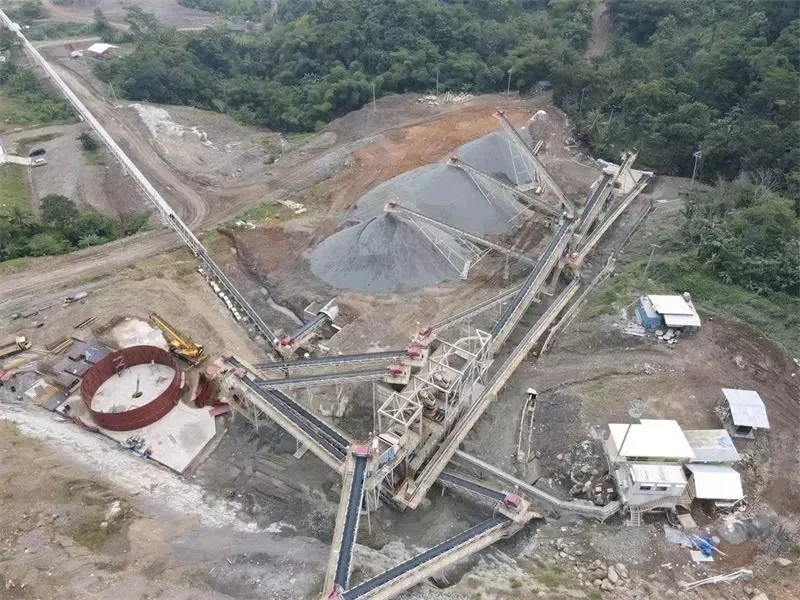
Incomplete crushing RFQs create slow quotes and mismatched machines. Gaps get filled with assumptions—wrong CSS, undersized power, or missing liner stock. This buyer packet lists what to collect once so Songju Equipment can map NORDVIK jaw, cone, spares, and control scope without guesswork.
NORDVIK™ is a crushing-equipment trademark (Luoyang Pascal); sales are entrusted to Luoyang Songju Industrial Equipment Co., Ltd. Not a shipping brand. Send RFQs to sales@luoyangsongju.com or use the contact page.
Why RFQ quality beats brochure shopping
A crushing plant is a system: primary, secondary/tertiary cones, screens, conveyors, utilities, power, and control. Nameplates alone do not define it. Feed curves, product specs, and site limits produce comparable offers; “200 t/h granite line” does not.
Use published envelopes as orientation—e.g. JC jaw (9 models, 75–400 kW, openings 800×510–2,000×1,500 mm) and PGP cones (35–870 t/h, feed 46–442 mm, 75–400 kW)—then size models against your density and CSS.
Section A — Feed and material
Capture the rock before you capture the machine list:
- Material name / geology — limestone, granite, basalt, iron ore, copper ore, recycled concrete, etc.
- Abrasiveness and clay / sticky fines — drives liner alloy and chamber cleaning.
- Moisture and temperature extremes — affects screening and winter operation.
- Bulk density (t/m³) — capacity tables are density-sensitive; state the design value.
- Feed size distribution — max lump (mm) plus a simple grading if available (not only “0–800 mm”).
- Contamination — tramp metal, wood, oversize from upstream mining.
If ROM max size exceeds a realistic primary opening, say so; the quote may need a different primary type (jaw vs gyratory) rather than a bigger motor on the wrong chamber.
Section B — Products, CSS, and circuit type
Define what leaves the plant:
- Product sizes — e.g. 0–5 / 5–10 / 10–20 mm or mine mill feed top size.
- Shape / cubicity requirements — yes/no and any test method your market uses.
- CSS or OSS targets by stage if already known; if not, state product and ask for proposed settings.
- Open vs closed circuit on each crushing stage; screen apertures if known.
- Design t/h continuous, plus peak if the quarry loads trucks in bursts.
- Future expansion — second shift, second tertiary, or higher t/h within 3–5 years.
Automatic liner wear compensation matters here: if product size must stay inside tolerance across a liner campaign, require CSS hold-as-liners-wear language for jaw and cone stages that offer it (JC, GC, PGP, PHP, PCH/PCS pages all feature this capability).
Section C — Machine scope shortlist
List what you want quoted as scope options, not a single frozen SKU:
| Stage | Typical NORDVIK starting points | Notes for RFQ |
|---|---|---|
| Primary | Jaw crusher JC or gyratory GC | Opening, kW, CSS, wear compensation |
| Secondary / tertiary | PGP, PHP, or PCH/PCS | Feed to cone, cavity, t/h at CSS |
| Wear parts | Crusher spare parts | Mantles, concaves, jaw plates, blow bars; Mn13Cr2–Mn22Cr2 framing |
| Control | Modular centralized control room | Containerized e-house / MCC / PLC–SCADA |
You do not need to pre-select PHP vs PCH; you do need to give feed and product so the series recommendation is grounded. Link only the pages you are ready to discuss; avoid asking for unrelated product families.
Section D — Power, utilities, and site limits
- Supply voltage and available kW (and altitude if high).
- Generator vs grid — soft-start / VFD expectations if any.
- Water for dust suppression or washing (m³/h if known).
- Compressed air needs if instrumentation requires it.
- Foundation style — permanent civil vs modular skids; crane limits for liner changes.
- Noise / dust / permitting constraints that affect enclosure and e-house placement.
- Ambient — desert heat, arctic cold, high humidity, corrosive coastal air.
Modular containerized e-house / centralized control scope should be called out explicitly if you want MCC + PLC/SCADA + operator cabin quoted with the mechanical line rather than as a later afterthought (modular control room).
Section E — Liners, spares, and maintainability
Availability is a spare-parts problem as much as a crusher problem:
- Liner alloy class — manganese grades commonly quoted in the Mn13Cr2–Mn22Cr2 range; confirm against ore wear.
- Stock policy — months of jaw plates / mantles / concaves on site.
- Change-out method — overhead crane capacity and top-service expectations.
- Mechanical spares — bushings, belts, hydraulics kits as a separate line.
- Multi-brand wear parts — if the site already runs other OEMs, say so; NORDVIK spare pages reference wear parts for 15+ brands with OEM-fit intent—still send drawings or part numbers.
Put spares on the first RFQ. Adding them after mechanical award is how plants run out of liners in month four.
Section F — Controls, safety, and data
- Local vs centralized control preference.
- PLC / SCADA brand preferences (or “vendor standard”).
- Interlocks — pull-cord, belt drift, crusher lube, tramp release logic.
- Remote access policy for OEM support (allowed / forbidden).
- Language for HMI and documentation (EN / RU / other).
- Training — days on site vs FAT only.
Section G — Commercial and logistics (no invented MOQ)
State facts you already know:
- Ship-to country and preferred Incoterm.
- Target mechanical completion window (month/year).
- Scope split — machines only vs machines + e-house vs advisory flowsheet.
- Inspection / FAT expectations.
- Documentation set — GA drawings, foundation loads, electrical single-line, wear-part manuals.
- Payment / bonding per your company policy (keep internal limits in the private RFQ).
Public pages do not set a universal plant MOQ—ask lead time by configuration instead.
Master copy/paste RFQ
Subject: Crushing plant RFQ — [mine/quarry] — [design t/h]

A. Material
- Type / abrasiveness / moisture / density (t/m³):
- Max feed size (mm) + grading notes:
- Tramp metal / contaminants:

B. Products & circuit
- Product sizes / shape requirements:
- Design t/h (continuous / peak):
- Open or closed circuit per stage; screen apertures if known:
- CSS/OSS targets if known:
- Automatic liner wear compensation required? (yes/no)

C. Machines requested (tick)
- [ ] Primary jaw (JC) / [ ] Primary gyratory (GC) / [ ] Open
- [ ] Secondary/tertiary cone (PGP / PHP / PCH-PCS / Open)
- [ ] Wear parts package (liners + mechanical)
- [ ] Modular centralized control room / e-house
- [ ] Other (specify):

D. Site & power
- Voltage / available power / altitude:
- Civil: permanent / modular; crane limit:
- Water / dust / climate notes:

E. Spares & service
- Liner alloy preference or wear class:
- Months of liner stock to quote:
- Training / documentation languages:

F. Commercial
- Ship-to / Incoterm preference:
- Target delivery / commissioning window:
- Contact name / WhatsApp / email:
Send to sales@luoyangsongju.com. For a short form, use /contact/ and attach this checklist as a PDF or spreadsheet.
Call to action
Building a comparable vendor pack? Email the completed checklist to sales@luoyangsongju.com, browse JC jaw, PGP cone, spare parts, and the modular control room, then finalize scope on one thread.